
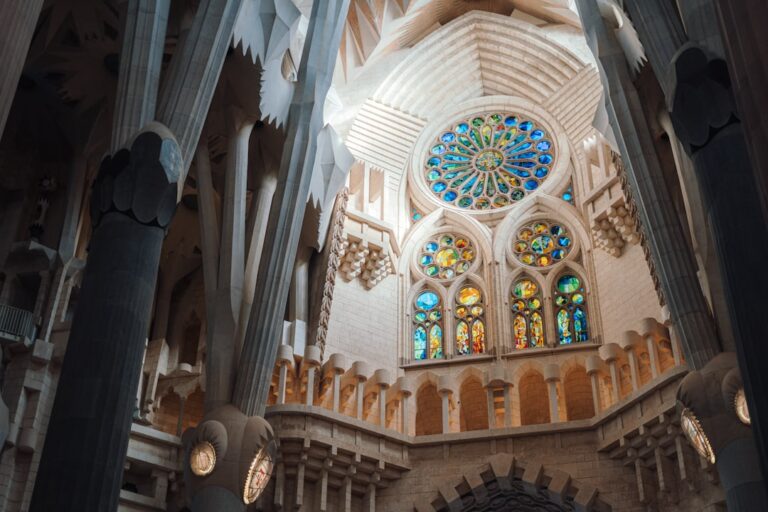
Everyone knows Gaudí. Tourists queue for hours at the Sagrada Família, snap photos at Casa Batlló, and leave feeling like they’ve understood Barcelona’s Modernisme. But there’s a parallel story — quieter, almost erased — about the women who financed, commissioned, decorated, and lived inside those extraordinary buildings. They didn’t appear in the architecture textbooks. They barely appear anywhere. But without them, the Barcelona you’re walking through today would look completely different.
The Patrons Nobody Talks About
It’s 1900. Barcelona is in the middle of an economic boom driven by colonial trade and the textile industry. Wealthy Catalan families are competing to build the most spectacular houses along Passeig de Gràcia and the newly built Eixample. And here’s the thing that history quietly skips: many of those fortunes — and those commissions — were controlled by women.
Eusebia Güell, wife of Eusebi Güell (Gaudí’s most famous patron), was not simply a name on a family tree. She managed significant parts of the family’s social and philanthropic network, which shaped how that money was spent on culture and architecture. But the clearest case is Doña Dorotea Murúa, who commissioned the Casa Lleó Morera on Passeig de Gràcia 35 — one of the three masterpieces of what locals call the Manzana de la Discordia (Block of Discord). The architect was Lluís Domènech i Montaner, and the building is a jaw-dropping explosion of stained glass, ceramic flowers, and sculpted stone. Yet it’s the least visited of the three famous buildings on that block. Go inside if you can — guided tours run regularly — and look at the dining room. That room was built for a woman who had very specific ideas about beauty.
Then there’s the story of the Palau de la Música Catalana, also designed by Domènech i Montaner and completed in 1908. The Palau was commissioned by the Orfeó Català choral society, but women formed a substantial part of its early audiences and fundraising base at a time when their participation in public cultural life was actively debated. The building’s interior — all light, glass, and sculpted female figures representing music and song — reflects an aesthetic universe where femininity wasn’t decorative. It was structural.
The Decorators Who Were Actually Artists
Walk into almost any Modernista building today and you’ll be surrounded by ceramic tiles, ironwork, stained glass, and textile patterns. Most visitors assume this was all the architect’s doing. It wasn’t. Much of it was the work of craftswomen and female designers working in studios and workshops that history has largely forgotten.
The ceramics school at the Sant Pau hospital — Domènech i Montaner’s other great masterpiece, now a UNESCO World Heritage Site open to visitors as Recinte Modernista de Sant Pau — trained both men and women in decorative arts at the turn of the century. The hospital was designed to feel like a garden city, not a medical institution. Its ceramic mosaics, floral motifs, and colour palette were executed by craftspeople whose names were never recorded in the official construction documents. That erasure was entirely intentional.
If you want to understand this world properly, spend an afternoon in the Museu Nacional d’Art de Catalunya on Montjuïc. The Modernisme collection on the ground floor includes furniture, textiles, jewellery, and decorative objects from the period — and if you look carefully at the labels, you’ll start noticing how often the creator is listed as