
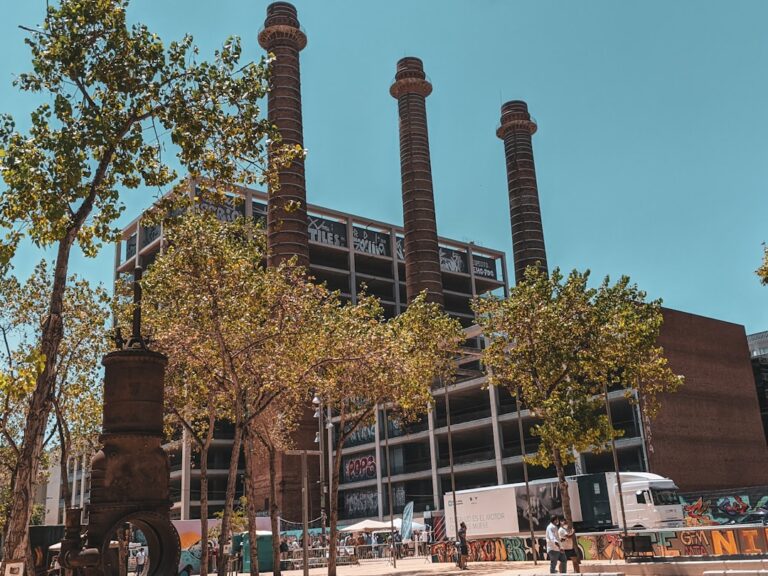
Walk down Carrer Pallars on a Tuesday morning and you’ll pass a converted textile factory where a DJ is setting up for a weekend party, a 19th-century warehouse turned into a Michelin-recommended restaurant, and a chimney stack that nobody has bothered to tear down — not because they forgot, but because the neighborhood decided it was worth keeping. That chimney tells a story. So does everything else in Poblenou.
Most tourists never make it here. They stay in the Gothic Quarter or wander the Eixample, not realizing that five metro stops away lies a neighborhood that holds the key to understanding how Barcelona actually became the city it is today.
The Manchester of the South — and What It Left Behind
In the mid-19th century, Poblenou was the beating industrial heart of Catalonia. Steam-powered looms, chemical plants, metalworks and printing presses lined its streets. Barcelona’s working class lived and died in its cramped apartment blocks, just steps from the factory floors. The area earned the nickname el Manchester català — the Catalan Manchester — and it wasn’t a compliment. It meant soot, long hours, and the kind of poverty that organized labor movements are born from.
The first Catalan workers’ strikes of the 1850s were organized in part in the taverns and back rooms of this neighborhood. The streets around Carrer Taulat and Rambla del Poblenou were the stage for protests that would shape Catalan — and Spanish — labor history for decades.
Then, in the second half of the 20th century, the factories closed. One by one, the industrial buildings emptied out. By the 1980s, large stretches of Poblenou were derelict, full of abandoned machinery and broken windows.
The 1992 Olympic Games changed everything. The Vila Olímpica was built on former industrial land at the southern end of the neighborhood, and a new seafront was created where factories once stood. It was radical urban surgery. Some of the old industrial fabric survived — barely — and that survival now defines the character of the place.
Today you can trace that history on foot. Start at the Rambla del Poblenou, a quieter, local version of La Rambla where people actually live, and walk toward the sea. Stop at Palo Market Fest, a monthly design market held in a former factory on Carrer dels Pallars, 30. Then head to Carrer Pallars itself, where the density of converted industrial buildings is highest — galleries, studios, startups, and restaurants in spaces that once housed looms and furnaces.
Living Inside the Ruins — Where to Eat, Drink and Stay Long
The conversion of industrial space into cultural and gastronomic venues is where Poblenou really shines, and where history stops being something you read on a plaque and becomes something you sit inside.